Webhook System Design - One Pager
Webhook System Design - One Pager
Overview
A scalable webhook delivery system that enables users to register webhooks for specific events and reliably delivers event notifications to registered endpoints with comprehensive monitoring and retry capabilities. 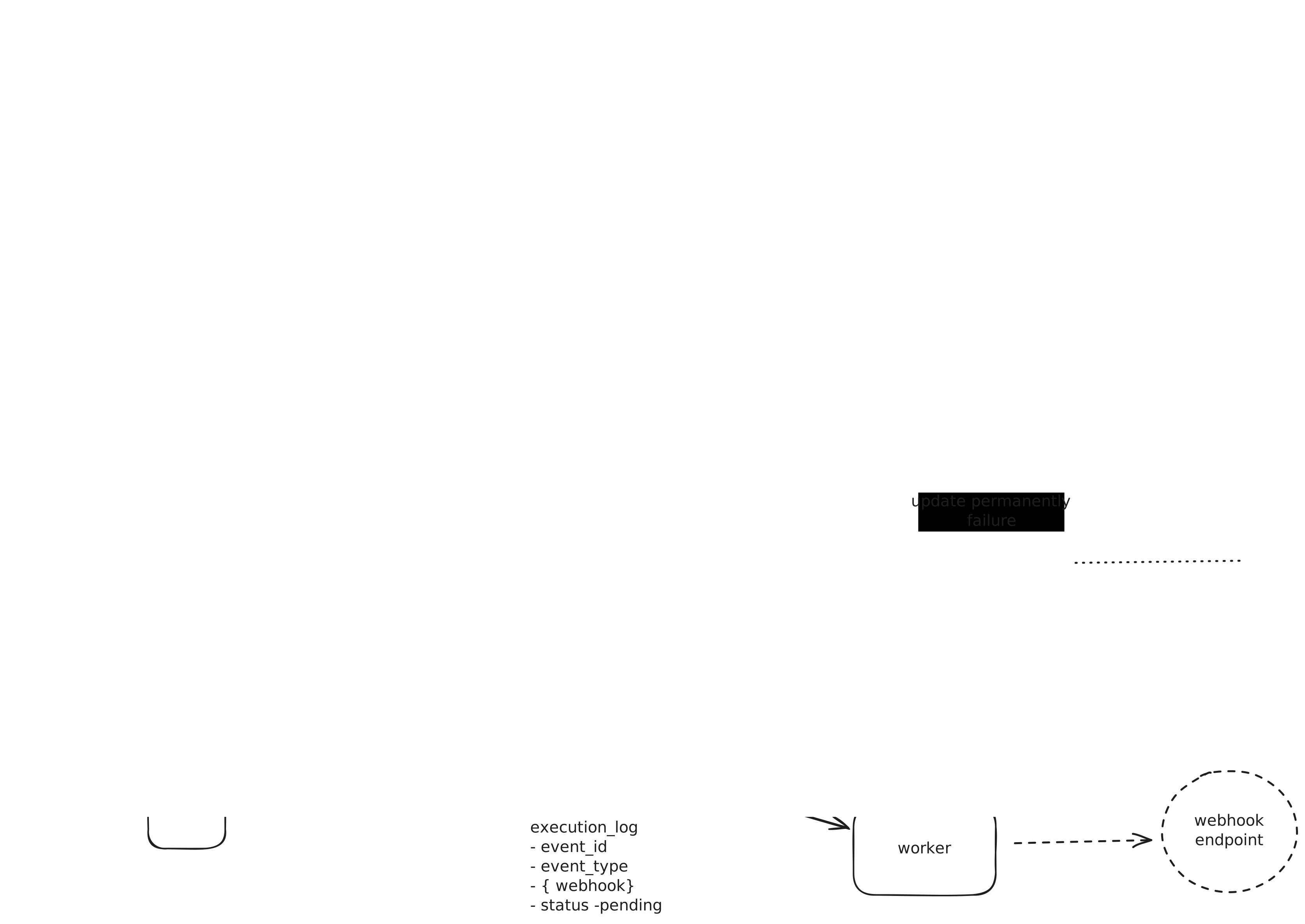
Functional Requirements
FR1: User Webhook Registration
- Users can register webhooks with custom URLs, authentication methods, and event types
- Support for webhook configuration including expiration time and retry policies
- Ability to manage (create, update, delete) webhook subscriptions
FR2: Event-Triggered Webhook Callbacks
- System automatically triggers webhook callbacks when registered events occur
- Asynchronous processing of webhook deliveries
- Support for multiple event types and selective webhook routing
FR3: Webhook Observability
- Users can monitor webhook delivery status and execution history
- Detailed execution logs with success/failure tracking
- Real-time status updates and historical analytics
Non-Functional Requirements
NFR1: At-Least-Once Delivery Guarantee
- Implement retry mechanisms with configurable retry strategies
- Persistent execution queue to prevent message loss
- Idempotency considerations for duplicate deliveries
NFR2: High Availability & Horizontal Scalability
- Distributed worker architecture for processing webhook deliveries
- Load balancer for distributing traffic across services
- Stateless services to enable easy scaling
NFR3: Security
- Authentication support for webhook endpoints
- Secure storage of webhook credentials
- Request signing and validation mechanisms
System Architecture
Core Components
1. Webhook Manager Service
- Responsibility: Handle webhook CRUD operations
- API Endpoints:
POST /webhooks- Register new webhookGET /webhooks/{id}- Retrieve webhook detailsPUT /webhooks/{id}- Update webhook configurationDELETE /webhooks/{id}- Remove webhook
- Data Access: Reads/writes to Webhook Metadata DB
2. Event Trigger Service
- Responsibility: Receive events and initiate webhook processing
- Flow:
- Receive events from event queue
- Query Webhook Metadata DB for matching webhooks
- Create execution tasks and enqueue to execution queue
- Caching: Uses cache layer for frequently accessed webhook configurations
3. Execution Queue
- Technology: Message queue (e.g., Kafka, RabbitMQ, SQS)
- Purpose: Decouple event reception from webhook delivery
- Features:
- Persistent storage for durability
- Support for message prioritization
- Dead letter queue for failed deliveries
4. Worker Pool
- Responsibility: Process webhook deliveries
- Characteristics:
- Horizontally scalable
- Pull messages from execution queue
- Make HTTP requests to webhook endpoints
- Record execution results to delivery log DB
- Error Handling:
- Implement retry logic based on webhook configuration
- Update delivery status in logs
- Route permanently failed deliveries to monitoring system
5. Retry Service
- Responsibility: Handle failed webhook deliveries
- Retry Strategies:
- Exponential backoff
- Fixed interval
- Custom retry schedules
- Configuration: Per-webhook retry policy settings
6. Monitoring Manager
- Responsibility: Provide observability into webhook operations
- Features:
- Dashboard for webhook status
- Execution metrics and analytics
- Alert generation for failures
- Historical trend analysis
7. Load Balancer
- Purpose: Distribute incoming requests across service instances
- Targets:
- Webhook Manager API
- Event Trigger Service
- Monitoring endpoints
Data Stores
Webhook Metadata Database
Schema:
1
2
3
4
5
6
7
8
9
10
11
12
Webhook {
  web_hook_id: UUID (PK)
  url: String
  auth: JSON (credentials, tokens)
  event_type: String[]
  user_id: UUID
  expire_at: Timestamp
  status: Enum (active, inactive, expired)
  retry_type: Enum (exponential, fixed, custom)
  created_at: Timestamp
  updated_at: Timestamp
}
Characteristics:
- Relational DB for ACID properties
- Indexed on user_id, event_type for fast queries
Webhook Delivery Log Database
Schema:
1
2
3
4
5
6
7
8
9
10
11
execution_log {
  event_id: UUID (PK)
  event_type: String
  webhook: JSON (snapshot of webhook config)
  status: Enum (pending, success, failure, retrying)
  response_code: Integer
  response_body: Text
  attempt_count: Integer
  executed_at: Timestamp
  next_retry_at: Timestamp
}
Characteristics:
- High write throughput optimization
- Time-series optimized storage
- Partitioned by date for efficient querying
Cache Layer
- Purpose: Reduce database load for frequently accessed webhooks
- Cached Data:
- Active webhook configurations
- Event-to-webhook mappings
- Cache Invalidation: On webhook updates/deletions
Data Flow
Webhook Registration Flow
1
2
3
User → Load Balancer → Webhook Manager → Webhook Metadata DB
                                      ↓
                                    Cache (update)
Event Processing Flow
1
2
3
4
5
6
7
8
9
Event Source → Events Queue → Event Trigger Service
                                    ↓
                          Query Cache/Metadata DB
                                    ↓
                            Execution Queue → Worker Pool → Webhook Endpoint
                                                    ↓
                                          Delivery Log DB
                                                    ↓
                                    (if failure) → Retry Service
Monitoring Flow
1
2
3
User → Load Balancer → Monitoring Manager → Delivery Log DB
                                                  ↓
                                         (analytics & metrics)
Key Design Decisions
1. Queue-Based Architecture
- Rationale: Decouples event generation from delivery, enabling better scalability and fault tolerance
- Trade-off: Adds latency but improves reliability
2. Worker Pool Pattern
- Rationale: Allows independent scaling of webhook delivery capacity
- Implementation: Workers compete for messages from execution queue
3. Execution Log Persistence
- Rationale: Enables audit trails, debugging, and monitoring
- Optimization: Consider time-based archival for old logs
4. Cache Integration
- Rationale: Reduces database load for hot webhook configurations
- Strategy: Cache-aside pattern with TTL-based expiration
5. Retry Service Separation
- Rationale: Specialized handling of failed deliveries without blocking main worker pool
- Pattern: Scheduled retry jobs with exponential backoff
Scaling Considerations
Horizontal Scaling Components
- Webhook Manager (stateless API)
- Event Trigger Service
- Worker Pool (most critical for throughput)
- Monitoring Manager
Bottleneck Mitigation
- Database: Read replicas for webhook metadata, sharding for delivery logs
- Queue: Partitioned topics/queues for parallel processing
- Workers: Auto-scaling based on queue depth
Security Measures
- Authentication:
- Support for multiple auth methods (API keys, OAuth, JWT)
- Encrypted storage of credentials
- Request Validation:
- HMAC signatures for webhook payloads
- Timestamp validation to prevent replay attacks
- Rate Limiting:
- Per-webhook delivery rate limits
- Circuit breaker pattern for problematic endpoints
- Data Protection:
- TLS for all communications
- PII handling compliance
Monitoring & Alerting
Key Metrics
- Delivery success rate
- Average delivery latency
- Queue depth
- Worker utilization
- Retry rate
- Endpoint availability
Alerts
- High failure rate for specific webhooks
- Queue backup/overflow
- Worker pool saturation
- Database connection issues
Future Enhancements
- Advanced Filtering: Allow complex event filtering based on payload content
- Webhook Templates: Pre-configured webhook patterns for common use cases
- Delivery Guarantee Options: Support for at-most-once and exactly-once semantics
- Payload Transformation: Allow users to customize webhook payload format
- Multi-region Deployment: Geographic distribution for lower latency
- Webhook Testing: Sandbox environment for webhook validation
Document Version: 1.0
Last Updated: November 1, 2025
Author: Copilot
This post is licensed under CC BY 4.0 by the author.